Digital marketers love data.
Clicks. Views. Sessions. Impressions. Conversions. Engagement. Bounce rates. Open rates.
We have metrics for our metrics.
But there’s an important question businesses should be asking: How much do we actually know about our own customers?
That’s where first-party data marketing comes in.
Rather than relying exclusively on information supplied by advertising platforms and other third parties, businesses can build useful customer insights through their own digital channels and relationships.
And no, this isn’t about becoming creepy.
Quite the opposite.
What Is First-Party Data?
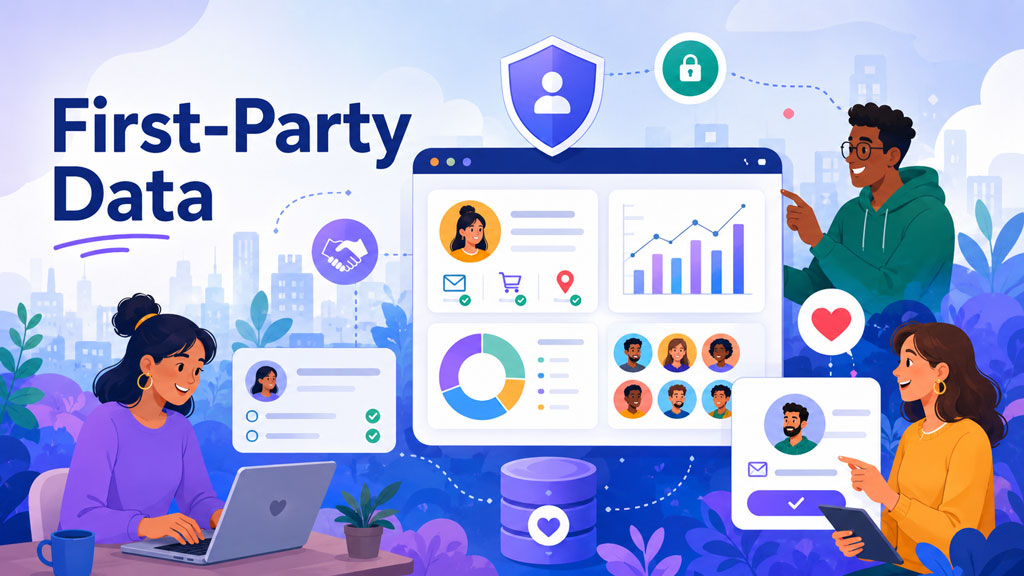
First-party data is information your business collects directly through interactions with its customers and audiences.
Depending on your business and how information is collected, that might include:
Website enquiries
Newsletter subscriptions
Customer accounts
Purchases
Customer preferences
Surveys
Loyalty programmes
Event registrations
Website interactions
Customer service interactions
Instead of renting all your audience intelligence from somebody else’s platform, you’re building your own understanding of the people interested in your business.
That’s rather useful.
Why Is First-Party Data Marketing Becoming More Important?
Digital advertising has become incredibly sophisticated, but businesses don’t control the major advertising and social platforms.
Algorithms change.
Targeting options change.
Privacy requirements evolve.
Platforms come and go.
Relying entirely on somebody else’s ecosystem can leave your business vulnerable when the rules change.
First-party data marketing helps create a more direct relationship between your business and its customers.
You can learn what they’re interested in, understand how they interact with you, and communicate with them more relevantly, provided that data is collected and used responsibly.
How Can Businesses Build First-Party Data?
You don’t need to interrogate everyone who visits your website.
“Hello. Welcome to our homepage. Please provide your life story.”
Maybe don’t do that.
Instead, create genuine value in exchange for information.
Useful Newsletter Subscriptions
Nobody wakes up thinking, “I desperately need more promotional emails.”
Give people a proper reason to subscribe.
Useful advice, industry insights, new products, special offers, resources, or genuinely entertaining content can make email worthwhile.
Lead Generation Forms
If somebody requests a quote, consultation, catalogue, demo, or more information, they’re telling you something about what interests them.
Keep forms straightforward and only ask for information you actually need.
Surveys and Quizzes
Want to know what customers prefer?
Revolutionary suggestion incoming:
Ask them.
Short surveys, interactive tools, and quizzes can provide useful information while also creating engagement.
Customer Accounts and Loyalty Programmes
Repeat customers can tell you an enormous amount about purchasing patterns, interests, and preferences.
A well-designed loyalty or account experience can provide value to both sides.
Personalisation Without Getting Creepy
Good personalisation makes someone think:
“Oh, that’s useful.”
Bad personalisation makes them think:
“How on earth do they know that?”
There’s a difference.
The goal should be relevance rather than surveillance.
Businesses need to be transparent about what information they’re collecting and why. South African companies should also consider their responsibilities under POPIA when collecting, storing, processing, and using personal information.
Consent, security, purpose, and appropriate handling of customer information shouldn’t be treated as minor technical details.
Trust is part of marketing too.
Turn Customer Insight Into Better Marketing
Collecting information isn’t the goal.
Using it intelligently is.
First-party customer insights can potentially help businesses improve:
Audience Segmentation: Not every customer wants the same thing. Different audiences can receive content or offers that better match their interests.
Content Strategy: Customer questions and behaviours can reveal what people actually want to know. That means better blogs, videos, FAQs, emails, and social content.
Customer Retention: Marketing isn’t only about finding new customers. Understanding existing customers can help businesses communicate more effectively, encourage repeat business, and build stronger relationships.
Advertising: Your own customer insights can also contribute to more informed paid advertising strategies, depending on the platforms, permissions, and technologies involved.
Your Website Becomes Even More Important
Here’s the interesting bit.
As first-party data marketing becomes more valuable, your own digital properties become more important too.
Your website isn’t simply an online brochure.
It’s where people research your business, read your content, submit enquiries, browse products, sign up, make purchases, and interact directly with your brand.
That makes website development, SEO, content, analytics, conversion optimisation, and marketing strategy increasingly connected.
A pretty website is nice.
A pretty website that actually helps you understand and convert customers is considerably nicer.
Build Marketing Around Real Customer Insight
Digital marketing works better when you know who you’re talking to.
Ipcoweb Digital brings together digital strategy, SEO, content creation, PPC, social media, creative work, and development to help businesses create connected online experiences rather than a random collection of marketing activities.
Because ultimately, your customers aren’t clicks, impressions, or rows in a report.
They’re people.
And understanding those people is where better marketing begins.
FAQs About First-Party Data Marketing
What is first-party data marketing?
First-party data marketing uses information a business collects directly through its own customer relationships and digital channels to inform marketing decisions and communication.
What are examples of first-party data?
Examples can include customer enquiries, purchases, email subscriptions, survey responses, account information, preferences, and interactions with your website.
Is first-party data affected by POPIA?
Personal information collected and processed by South African organisations may fall within POPIA requirements. Businesses should ensure they collect, store, process, and protect personal information appropriately.
How can first-party data improve digital marketing?
It can help businesses better understand customers, segment audiences, develop relevant content, improve customer retention, and inform advertising and digital strategy.