Google it.
For years, that has been the default response whenever we need to find a restaurant, research a product, settle an argument, or work out why the washing machine is making that noise.
But search habits are changing.
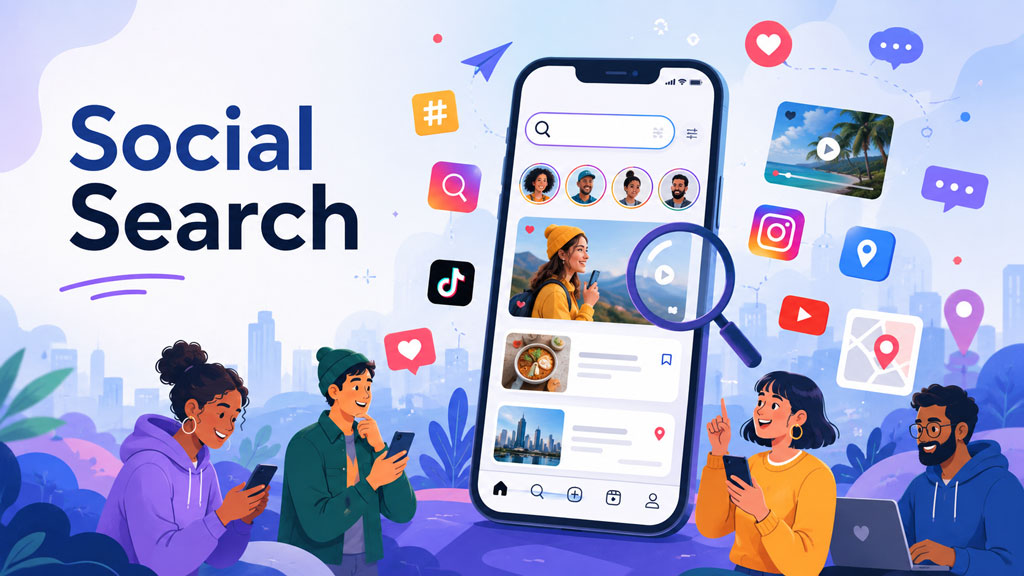
Today, someone looking for a new coffee spot might open Instagram. Someone planning a holiday could head to TikTok or YouTube. A shopper considering a new product might check social videos, comments, reviews, and creator recommendations before ever visiting a traditional search engine.
Welcome to the era of social search marketing, where getting found online means thinking beyond Google.
What Is Social Search Marketing?
Social search marketing is the process of creating and optimising content so that people can discover your business when searching on social platforms.
Think about how people use TikTok, Instagram, YouTube, Facebook, Pinterest, Reddit, and other platforms. They’re not simply scrolling aimlessly. They’re looking for things.
That could be:
- “Best restaurants in Johannesburg”
- “How to choose running shoes”
- “Kitchen renovation ideas”
- “Best skincare for winter”
- “Things to do in Cape Town”
- “How does solar power work?”
That makes your social content more than entertainment. It can become searchable, evergreen content that helps potential customers find you.
Why Are People Searching on Social Media?
Sometimes, seeing something is easier than reading about it.
If you’re choosing a restaurant, you probably want to see the food. If you’re researching a hotel, you’d like to look around the room. If you’re comparing products, watching someone demonstrate them can answer questions a product description might not.
Social platforms also offer something traditional search results don’t always provide as easily: personality.
You can see the people behind a business, read comments, watch demonstrations, hear customer experiences, and get a feel for the brand.
In other words, social search mixes information with discovery, entertainment, and social proof.
How to Optimise Content for Social Search
This doesn’t mean cramming keywords into every caption until your Instagram post sounds like it was written by an SEO robot from 2009.
Please don’t do that.
Instead, social search marketing should start with understanding what your customers actually want to know.
Use the Words Your Customers Use
If someone might search for “digital marketing agency Johannesburg”, make sure your profile and relevant content clearly explain what you do and where you operate.
The same principle applies to products, services, problems, questions, and locations.
Make Your Captions Descriptive
“Another lekker day at the office!” might be fun, but it tells search systems very little.
“Behind the scenes of our latest website design project for a Johannesburg retailer” provides far more context while still sounding human.
Put Searchable Information in Your Videos
Use clear titles, spoken explanations, captions, and on-screen text.
If you’re creating a video about choosing an air conditioner, say so. Don’t make viewers or algorithms play detective.
Think Local
For South African businesses serving particular regions, location matters.
Mention relevant suburbs, towns, cities, or provinces naturally where appropriate.
“Five things to consider before renovating your kitchen in Johannesburg” is much more useful to a local customer than “Some renovation tips”.
Social Search Doesn’t Mean SEO Is Dead
Ah yes, the internet’s favourite headline: SEO IS DEAD.
SEO has apparently died approximately 472 times.
In reality, social search and traditional SEO complement each other.
Your website remains the digital home of your business. It gives you control over your content, provides detailed product and service information, generates enquiries, supports paid campaigns, and helps your business appear in conventional search results.
Social media can introduce someone to your brand. Your website can help turn that curiosity into action.
That’s why a modern search strategy needs to think about the entire journey.
Search engines. Social platforms. Video. Content. Reviews. Websites. Advertising.
They’re increasingly interconnected.
Create Content Worth Finding
The biggest opportunity in social search marketing isn’t tricking an algorithm.
It’s becoming genuinely useful.
Answer questions. Demonstrate your expertise. Show how things work. Explain confusing topics. Share helpful advice. Create entertaining content. Give people a reason to stop scrolling.
Because whether somebody finds you through Google, TikTok, Instagram, YouTube, or somewhere we haven’t even heard of yet, one thing hasn’t changed:
Good content wins attention.
Get Found Wherever Your Customers Are Searching
Your customers aren’t spending their entire online lives in one place, so your marketing shouldn’t either.
Ipcoweb Digital brings SEO, content creation, social media, PPC, design, video, and development together to create digital strategies that help businesses get noticed, and give people a reason to stick around once they find them.
Ready to make your brand a little harder to miss? Let’s get you found.
FAQs About Social Search Marketing
What is social search marketing?
Social search marketing involves optimising content so users can discover your business through searches on platforms such as TikTok, Instagram, YouTube, Facebook, and others.
Does social search replace Google SEO?
No. Social search complements traditional SEO. A strong digital strategy should make your business discoverable across search engines, social platforms, and other relevant digital channels.
How can I optimise Instagram or TikTok content for search?
Use clear descriptions, relevant keywords, useful captions, descriptive on-screen text, location information, and content that answers questions your target customers genuinely ask.
What type of content works well for social search?
How-to videos, FAQs, tutorials, product demonstrations, comparisons, local guides, tips, reviews, and educational content can all work well because they answer specific search queries.