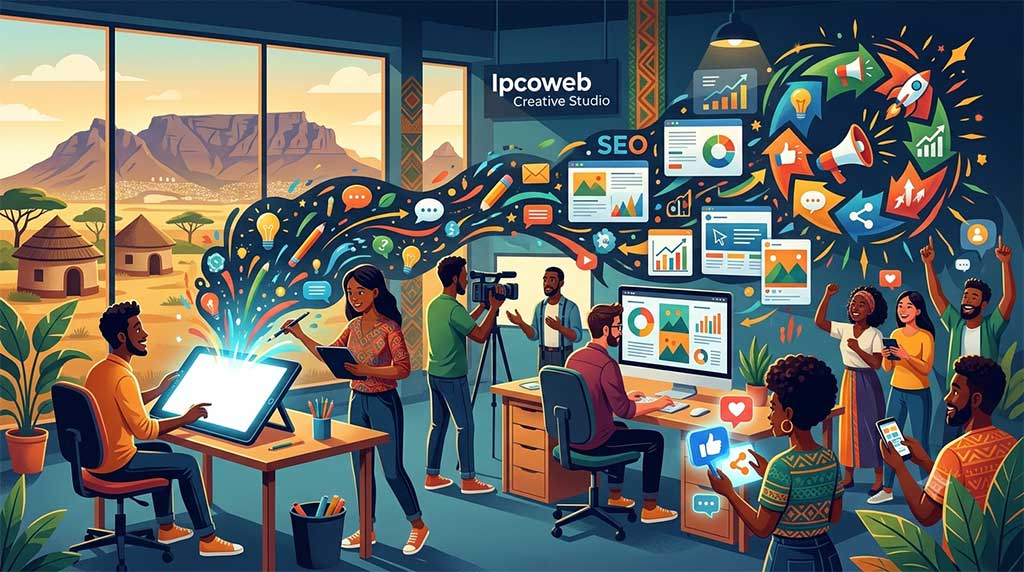
Every piece of content begins in roughly the same place: a blank page, an empty design canvas, or a blinking cursor that seems to be waiting rather impatiently for something brilliant to happen.
For businesses, the challenge is not simply filling that empty space. It is deciding what to say, who needs to hear it, where it should be published, and how it can support a meaningful marketing goal.
A rushed social media post may earn a few likes. A generic website page may technically explain a service. A hastily written article may even attract the occasional visitor. However, effective content should do more than occupy space online.
It should introduce your brand, answer customer questions, improve search visibility, encourage engagement, and help people take the next step.
Professional content creation services in South Africa bring strategy, creativity, industry understanding, and digital marketing knowledge together. Instead of publishing disconnected pieces whenever inspiration strikes, businesses can build a consistent content presence that supports their wider objectives.
Ipcoweb Digital combines content creation with SEO, website development, social media marketing, digital advertising, graphics, video, animation, and performance analysis. This connected approach helps us turn an initial idea into content that is not only polished but also useful, discoverable, and ready to work across different digital channels.
What Are Content Creation Services?
Content creation services involve researching, planning, producing, optimising, publishing, and improving material designed for a particular audience.
The word “content” covers much more than blog articles. Depending on the business and campaign, it can include:
- Website copy
- Service and product pages
- SEO articles
- Landing pages
- Social media posts
- Graphics and digital visuals
- Videos and animations
- Campaign messages
- Infographics
- Frequently asked questions
- Educational guides
- News and company updates
- Calls to action
- Search and social advertising copy
Each format has a different job.
A website service page may need to explain an offering and generate enquiries. A social post could introduce that service to a wider audience. An article might answer a common customer question, while a video demonstrates the solution in a more visual way.
The strongest content strategies allow these formats to support one another.
One useful idea can become a detailed article, a shorter social post, a visual graphic, a video concept, and a landing-page message. This allows the business to communicate consistently without simply copying and pasting the same wording everywhere.
Why South African Businesses Need Better Content
South African customers have an enormous amount of digital information competing for their attention.
They scroll through social feeds, browse websites, watch videos, compare suppliers, search for local services, and move rapidly between different platforms. Businesses are not only competing against direct competitors. They are competing against every notification, video, message, meme, and news headline appearing on the customer’s screen.
This makes useful, memorable content incredibly valuable.
Strong content can help a South African business:
- Explain unfamiliar products or services
- Establish credibility in a competitive industry
- Reach customers in specific cities or provinces
- Improve its organic search presence
- Support paid digital campaigns
- Build a recognisable brand personality
- Answer questions before an enquiry
- Turn website visits into leads
- Remain visible between purchases
- Educate customers about complex solutions
Local relevance also matters.
A message created for an overseas audience may not reflect South African terminology, humour, purchasing behaviour, challenges, or expectations. Even when the basic subject is universal, the way it is explained should feel appropriate to the people reading it.
Professional content creation services in South Africa help businesses communicate in a way that feels polished without becoming distant, and local without relying on tired clichés.
Content Starts with a Goal, Not a Caption
One of the most common content mistakes is jumping straight into production.
A business decides that it needs a blog post, so somebody writes one. It decides that it should be active on social media, so random product photographs begin appearing every Tuesday. A new service launches, and a paragraph is added to the website without considering how customers will find it.
The content may be perfectly pleasant, but what is it meant to achieve?
Before we create anything, we need to understand the purpose behind it. Common content goals include:
- Increasing brand awareness
- Improving search visibility
- Introducing a new product
- Explaining a complicated service
- Generating quotation requests
- Supporting a promotion
- Building authority
- Driving website traffic
- Growing social engagement
- Encouraging online purchases
- Supporting customer retention
A single piece can contribute to more than one goal, but it should still have a clear primary purpose.
For example, an SEO article may attract organic search traffic and build trust. Its main call to action could then guide readers towards a related service page or enquiry form.
Without this direction, content can become a busy collection of words and pictures that looks active but produces little value.
Understanding the Audience
Content works best when it feels as though it was created for a recognisable person rather than “everyone”.
A technical manager researching industrial equipment needs different information from a homeowner comparing security services. A procurement officer may want specifications and reliability details, while a consumer shopping for clothing is more likely to focus on comfort, price, style, and delivery.
Audience research can explore:
- Who the ideal customer is
- What problem they are trying to solve
- What they already know
- What questions they frequently ask
- What may prevent them from acting
- Which platforms they use
- Whether they prefer detailed or visual information
- Which locations the business serves
- What would help them trust the brand
This knowledge shapes the language, format, length, and complexity of the content.
It also prevents brands from spending too much time talking about themselves. Customers are interested in the company’s history and capabilities, but they primarily want to know how those capabilities can help them.
Good content connects the two.
Finding the Big Idea
A content idea does not need to be wildly dramatic to be effective. It needs to be relevant.
Some of the most useful ideas come from everyday business conversations, including:
- Questions customers ask repeatedly
- Common buying mistakes
- Industry misconceptions
- Product comparisons
- Seasonal requirements
- Changes in customer behaviour
- New services or features
- Problems the business regularly solves
- Behind-the-scenes processes
- Advice from experienced team members
One strong idea can become the centre of a wider campaign.
Imagine a company offering solar panel maintenance. A core article could explain why regular cleaning matters. That subject could then support a short video, an infographic, several social posts, a service-page update, and a paid campaign directing customers to request an inspection.
This is where planning turns an isolated article into a useful digital asset.
We consider how creative ideas can work across text, graphics, video, animation, search, websites, and social media. That means the blank page is not treated as a lonely starting point. It becomes the first part of a broader marketing journey.
Creating a Practical Content Plan
A content plan gives structure to the creative process.
It outlines what should be created, why it matters, who it is for, where it will appear, and how often new material is required.
A practical plan may include:
- Core content topics
- Target keywords
- Intended audiences
- Relevant products or services
- Content formats
- Publishing platforms
- Campaign dates
- Seasonal opportunities
- Calls to action
- Internal linking opportunities
- Performance measurements
A plan should be organised without becoming so rigid that it cannot respond to new ideas or timely opportunities.
South African businesses may need content linked to public holidays, seasonal behaviour, industry events, school calendars, financial periods, weather patterns, or local buying cycles. Planning ahead allows these subjects to be developed properly rather than assembled in a panic the afternoon before publication.
Consistency is important, but consistency does not mean publishing something meaningless every day. A smaller number of strong, purposeful pieces can provide more value than a constant stream of repetitive content.
Website Content That Guides and Converts
A website is often the centre of a company’s digital presence. Social media posts, Google Ads, organic search results, and online directories frequently direct people back to it.
The content must therefore do more than sound professional. It must help visitors understand the business and move towards an action.
Effective website content usually answers several questions quickly:
- What does the business offer?
- Who is the service for?
- Which problem does it solve?
- Where is the business located or available?
- Why should the visitor trust the company?
- What should the visitor do next?
Different website pages perform different roles.
Home Page Content
The home page introduces the brand and directs people towards important products, services, or information.
It should provide a clear overview without trying to squeeze the entire business into one enormous wall of text.
Service Pages
Service pages explain individual offerings in more detail. They can cover benefits, processes, applications, locations, and frequently asked questions.
These pages are particularly important for SEO because customers often search for a specific solution rather than the company itself.
Landing Pages
A landing page is created around a focused campaign or offer.
It should match the message that brought the visitor there, remove unnecessary distractions, and encourage one clear action.
Product and Category Content
E-commerce content helps customers compare, understand, and choose products. Useful descriptions should go beyond a list of features and explain how those features benefit the buyer.
About and Trust Content
About pages, team information, case studies, testimonials, contact details, and company credentials can all contribute to credibility.
Our content creation and website development capabilities allow us to consider both the words and the structure surrounding them. Great copy should not be buried inside a confusing layout or weakened by slow performance and awkward navigation.
SEO Content: Writing for People and Search Engines
SEO content is often misunderstood as ordinary writing with a keyword pushed into every second sentence.
That approach usually creates clumsy copy and a fairly miserable reading experience.
Search-focused content should begin with the reader. It must answer a real question, explain a relevant subject, or help someone make a decision. Keywords then help search engines understand the topic and connect the page with appropriate searches.
An SEO content process may include:
- Keyword research
- Search-intent analysis
- Competitor research
- Topic selection
- Content structuring
- Heading optimisation
- Internal linking
- Metadata creation
- Image recommendations
- Readability improvements
- Calls to action
- Performance monitoring
The primary keyword should appear naturally in prominent places, including the title, introduction, relevant headings, and body copy. Related terms can provide context without making the writing repetitive.
This article, for example, focuses on content creation services in South Africa, but it also discusses website copy, SEO articles, social media content, visual design, video, strategy, and analytics. These connected subjects give readers a fuller answer.
Quality SEO content is not written for a robot. It is written for a person, with enough clarity and structure to help search technology understand it too.
Building E-E-A-T into Brand Content
Google’s E-E-A-T framework considers experience, expertise, authoritativeness, and trustworthiness.
For businesses, these qualities should appear naturally throughout the content rather than being added as empty claims.
- Experience: Content can demonstrate first-hand experience by discussing real processes, practical challenges, industry observations, and lessons learned through actual work.
- Expertise: Expertise is shown through accurate, clear, and genuinely helpful explanations. Complicated language is not proof of expertise. In many cases, the ability to make a complex subject understandable is far more convincing.
- Authoritativeness: Authority develops when a business covers its field consistently, provides useful resources, earns relevant mentions, and becomes recognised for knowledgeable contributions.
- Trustworthiness: Trust can be strengthened through accurate information, realistic claims, visible contact details, transparent policies, secure website experiences, and content that is kept up to date.
Businesses should avoid publishing generic AI-sounding statements that claim world-class excellence without providing any meaningful explanation. Customers have become remarkably skilled at spotting content that says plenty while communicating very little.
Specificity builds trust.
Instead of saying, “We provide outstanding solutions,” explain what the service includes, how the process works, and which customer problem it addresses.
Social Media Content That Starts Conversations
Social media gives brands opportunities to be visible, approachable, and responsive.
However, each platform has its own rhythm and audience expectations. A detailed LinkedIn post may not translate directly into a short Instagram caption, and a polished corporate announcement may feel out of place in a casual video format.
Social content may include:
- Educational posts
- Product highlights
- Quick tips
- Team introductions
- Customer stories
- Behind-the-scenes content
- Polls and questions
- Video clips
- Promotional campaigns
- Industry commentary
- Links to articles or landing pages
The aim is not always an immediate sale.
Some posts build familiarity. Others encourage interaction, answer questions, drive website visits, or keep the brand visible until the customer is ready to act.
Consistency in tone and visual identity helps people recognise the business as they move between platforms.
Our combined content creation, social media marketing, and graphic capabilities help align the message, design, and campaign objective. Instead of treating the caption and image as separate jobs, we create them as parts of the same communication.
Graphics, Video, and Animation Bring Ideas to Life
Not every subject is best explained through a long article.
A diagram may simplify a technical process. A short animation can demonstrate how a service works. A video may introduce the people behind the brand, while a graphic can turn a useful statistic or tip into something easy to share.
Visual content is especially useful for:
- Explaining complex ideas
- Demonstrating products
- Presenting step-by-step processes
- Capturing attention on social media
- Reinforcing brand identity
- Supporting presentations or campaigns
- Making detailed information easier to understand
The visual format should still be guided by strategy.
An attractive graphic without a useful message is decoration. A beautifully produced video without a clear audience or distribution plan may earn admiration without generating results.
We bring creative ideas, text, graphics, video, and animation into the same planning process so that every format supports the wider objective.
Repurposing Content Without Becoming Repetitive
Creating content takes time, research, and thought. Businesses should therefore look for sensible ways to extend the value of strong material.
Repurposing does not mean publishing the exact same paragraph across every channel. It means adapting the central idea to suit different formats and audiences.
A detailed article could become:
- A series of social posts
- A short educational video
- An infographic
- A list of frequently asked questions
- A landing-page section
- A graphic tip series
- A sales-team resource
- An updated service page
This approach helps maintain consistency while giving audiences several ways to engage with the subject.
It also supports customers at different stages. One person may first encounter a quick social tip, later read the full guide, and eventually visit the service page when they are ready to enquire.
Measuring Whether Content Is Working
Content performance should be measured against its intended goal.
A post created for awareness should not be judged only by immediate sales. Similarly, a landing page designed to generate enquiries should not be considered successful merely because it received a large number of views.
Useful measurements can include:
- Website visits
- Organic search impressions
- Search clicks
- Time spent on a page
- Social engagement
- Video views
- Link clicks
- Enquiry submissions
- Telephone calls
- Online sales
- Newsletter registrations
- Conversion rates
- Returning visitors
Google Analytics and Search Console can help reveal how people discover and use website content. Social media platforms also provide information about reach, engagement, audience activity, and clicks.
Data allows us to identify which subjects, formats, and messages are resonating.
A successful article may reveal demand for a related guide. A social post may show that customers are particularly interested in one service benefit. A landing page may receive traffic but need a stronger call to action.
Content creation is therefore not a simple process of publishing and walking away. Measurement helps us refine future work and improve existing assets.
Content Creation Is a Team Effort
Good content often requires input from several people.
The business understands its products, customers, and industry. Writers shape that knowledge into clear and engaging copy. Designers develop the visual language, while SEO specialists connect the content with search behaviour. Developers ensure it appears correctly on the website, and marketing specialists help distribute it.
This collaboration helps prevent common problems such as:
- Attractive content with no strategy
- Accurate content that is difficult to read
- SEO copy that sounds unnatural
- Strong campaigns directing visitors to weak pages
- Videos that do not match the brand
- Social posts with no clear next step
- Website content that is never updated
Ipcoweb Digital’s integrated capabilities allow content to connect with development, SEO, creative production, social media, paid advertising, and analytics.
The result is a more consistent journey from the first impression to the final enquiry.
Choosing Content Creation Services in South Africa
The right content partner should ask questions before offering answers.
Before appointing a provider, consider whether the team:
- Takes time to understand your business
- Researches your audience and industry
- Connects content with measurable objectives
- Understands SEO
- Can work across several content formats
- Writes in an appropriate brand voice
- Considers local South African audiences
- Provides clear approval processes
- Measures performance
- Can support related website and marketing needs
Be cautious of content sold purely by volume.
Twenty rushed articles are not necessarily more useful than four excellent ones. The quality, relevance, accuracy, originality, and purpose of the content matter far more than filling a monthly quota.
A good provider should be able to explain what is being created, why it is needed, where it will be used, and how it contributes to the broader strategy.
Turn Your Blank Page into Brand Buzz with Ipcoweb Digital
A blank page is not a problem. It is an opportunity to create something that informs, entertains, attracts, and converts.
Our content creation services in South Africa combine strategic thinking with words, graphics, video, animation, SEO, website development, social media, and digital marketing support.
We can help you identify valuable topics, create a practical content plan, develop website and campaign copy, produce engaging visual assets, strengthen search visibility, and measure how your content performs.
Most importantly, we make sure each piece has a purpose.
Whether you need a stronger website, a steady flow of SEO articles, creative social media content, a focused landing page, or an integrated campaign, we are ready to turn your ideas into content that gets your brand noticed.
Let us take your content from “We should really post something” to a consistent digital presence that builds trust, sparks interest, and supports genuine business growth.
Contact Ipcoweb Digital and let us create the words, visuals, and digital experiences that get people talking about your brand.
FAQs About Content Creation Services
What are content creation services?
Content creation services involve planning, researching, writing, designing, producing, optimising, and improving material for websites, search engines, social media, advertising campaigns, and other digital platforms.
What types of content can Ipcoweb Digital create?
We can support businesses with website copy, SEO articles, service pages, landing-page content, social media material, graphics, videos, animations, campaign messaging, and related digital content.
Why should a business outsource content creation?
Outsourcing gives a business access to experienced writers, designers, SEO specialists, and digital marketers without requiring every skill in-house. It can also improve consistency and free internal teams to focus on their core responsibilities.
How much do content creation services in South Africa cost?
The cost depends on the format, length, research requirements, frequency, design needs, video production, and level of strategic support involved. A tailored quotation should reflect the business’s goals and required deliverables.
How long does it take to create content?
Timelines vary. A short social post may be completed relatively quickly, while a researched article, website project, graphic campaign, or video requires more planning, production, review, and approval.
What information is needed before content creation begins?
We generally need information about your business, target audience, products or services, preferred tone, objectives, competitors, service areas, and any existing brand guidelines or marketing plans.
Does content creation include keyword research?
Keyword research can form part of an SEO-focused content strategy. It helps identify how potential customers search, which topics are relevant, and how individual pages should be structured.
How often should a business publish new content?
The right frequency depends on the business, audience, platforms, resources, and objectives. Consistency matters, but quality should not be sacrificed merely to publish more often.
Can content creation improve SEO?
Yes. Useful and well-optimised content can help search engines understand a website, target relevant searches, answer customer questions, strengthen internal linking, and create more opportunities for organic visibility.
What is the difference between copywriting and content creation?
Copywriting is generally focused on persuading a person to act, such as buying or submitting an enquiry. Content creation is broader and can include educational, entertaining, visual, informative, and promotional material. The two often overlap.
Can one piece of content be used on several platforms?
Yes. A strong central idea can be repurposed into articles, social posts, graphics, videos, landing-page sections, and FAQs. Each version should be adapted to suit the platform rather than copied word for word.
How do you maintain a consistent brand voice?
A consistent brand voice begins with understanding the company’s personality, audience, values, terminology, and communication style. Guidelines and approval processes help maintain this voice across writers, platforms, and formats.
Does every business need blog articles?
Not every business requires the same publishing schedule, but articles can be valuable for explaining services, answering questions, demonstrating expertise, and targeting informational search terms.
Can content creation support social media marketing?
Yes. Social media requires a reliable supply of relevant captions, visuals, videos, educational posts, and campaign ideas. A content strategy helps keep these materials consistent and connected to business objectives.
How is content performance measured?
Performance can be measured using website traffic, search impressions, clicks, engagement, video views, leads, sales, and conversion rates. The most appropriate measurements depend on the purpose of each piece.
Can content help a business appear in Google Discover?
Original, timely, useful, and engaging content may improve eligibility for Google Discover, particularly when it is supported by strong imagery, mobile-friendly pages, clear expertise, and a trustworthy website. Appearance in Discover cannot be guaranteed.
Why choose professional content creation services in South Africa?
A South African content partner can better understand local audiences, language conventions, locations, industries, and market conditions. This helps ensure that the message feels relevant rather than imported or generic.